Anja and Leon Explore Water and Air
Discover the Amazing Properties of Water and Air Through Hands-On Experiments
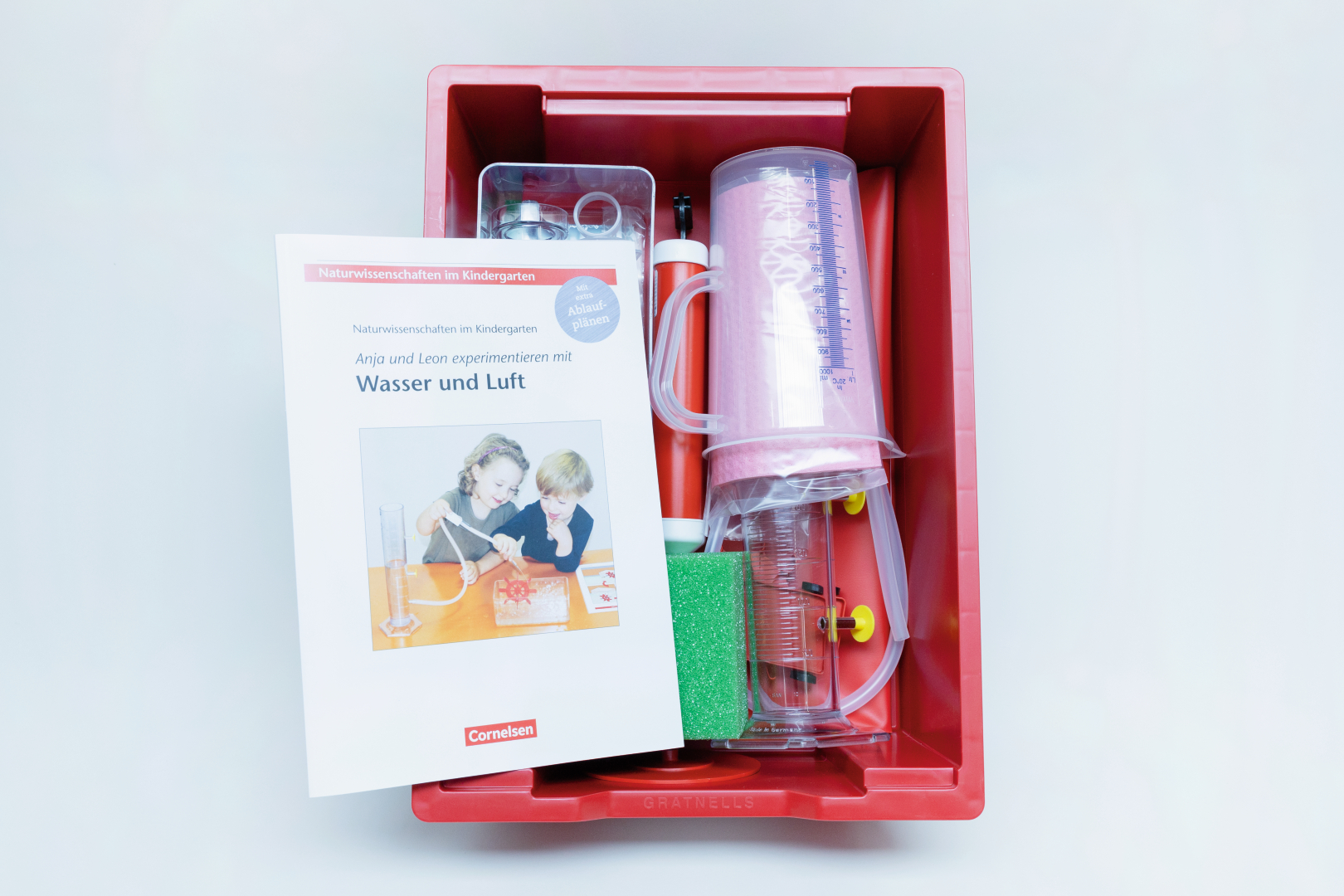
Water and air are powerful! With this experiment kit, children explore the fascinating properties of water and air through engaging, hands-on activities. They discover how water can transfer force, how air can be felt and even move objects, and how both can be used to generate energy.
Through a variety of age-appropriate experiments, children investigate scientific concepts independently and develop a basic understanding of natural phenomena. A simple hydraulics experiment demonstrates how water can transmit force, while other activities reveal how moving air can open doors or drive motion.
The kit includes detailed experiment guides with clear explanations of both the activities and the scientific principles behind them. Short stories featuring Anja and Leon provide a relatable introduction to each topic and help connect science to everyday life.
Illustrated step-by-step activity cards enable children to carry out many experiments independently, while material cards help them identify and learn the names of the included components.
Ideal for kindergarten, preschool and primary education, this kit encourages curiosity, exploration and early STEM learning through play.
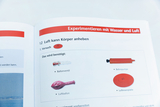
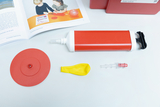
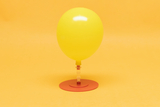
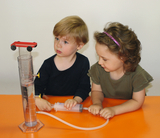
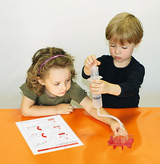


The children should be introduced to the following findings with the help of the experiment:
- Liquids (water) do not have a solid form and can fill free spaces.
- Liquids have a weight and need space (room).
- Liquids, like all bodies, want to fall down (flow).
- Liquids can only rise upward with pressure.
The children should be introduced to the following findings with the help of the experiment:
- Liquids (water) are fluid bodies that occupy space (room) and have a weight.
- Liquids exert pressure on all sides.
- The pressure in liquids increases more and more with depth.
The children should be introduced to the following findings with the help of the experiment:
- Liquids (water) do not have a solid form and can fill free spaces.
- Liquids require space (room) and can displace air from vessels.
- Liquids flow from one vessel to another when two vessels are connected until the liquid level is equal.
- The level in a vessel is independent of the vessel shape.
The children should be introduced to the following findings with the help of the experiment:
- Air is a body that occupies all free spaces.
- Air can be compressed and expanded.
- If air is sucked out of a closed container, the outer air tries to take up this space again with force and pressure.
- These force effects can be used practically.
The children should be introduced to the following findings with the help of the experiment:
- Air can be at rest or in motion.
- Moving air contains energy.
- The energy contained in moving air (wind) can act as a force when it encounters resistance.
The children should be introduced to the following findings with the help of the experiment:
- Liquids (e.g. water) do not have a solid form and can fill free spaces.
- Liquids that are in a sealed vessel require space and cannot be compressed.
- If pressure is exerted on a sealed liquid, the pressure is transferred through the liquid to the walls of the vessel and can take effect elsewhere.
The children should be introduced to the following findings with the help of the experiment:
- Liquids (water) are fluid bodies that can be easily moved and displaced.
- Liquids that are pressurized can also flow upward or faster.
- If the path of a flowing liquid becomes narrower (pipe), the speed of the flow increases.
The children should be introduced to the following findings with the help of the experiment:
- Flowing water can transfer energy.
- To create a flow, water can fall or flow down from a higher position.
- Flowing water can exert a force effect.
- That the flow energy of water can be converted into mechanical energy.
The children should be introduced to the following findings with the help of the experiment:
- Air is a body that occupies all free spaces.
- Air requires space, even if it is not visible.
- Air can displace other bodies, but can also be displaced by other bodies.
- Air is elastic and can be compressed into less space when it is enclosed.
The children should be introduced to the following findings with the help of the experiment:
- Air is a body that occupies all free spaces.
- Air can be moved from one vessel to another by pressure (air pump).
- The energy required to move the air is thereby transferred to the other location.
The children should be introduced to the following findings with the help of the experiment:
- Air is everywhere in space.
- Air can be above, next to and below an object or body.
- If a body falls in space filled with air, it can be slowed down by a cushion of air beneath it.
- The strength of the air cushion depends on the area of the falling body.
The children should be introduced to the following findings with the help of the experiment:
- Air is a body that requires space (room).
- Air is an elastic body that can be compressed in a closed space.
- Air stores the force used to compress it as energy.
- The stored energy can be released and used again.
The children should be introduced to the following findings with the help of the experiment:
- Air is a body that requires space (room).
- Air is an elastic body that can be compressed in a closed space.
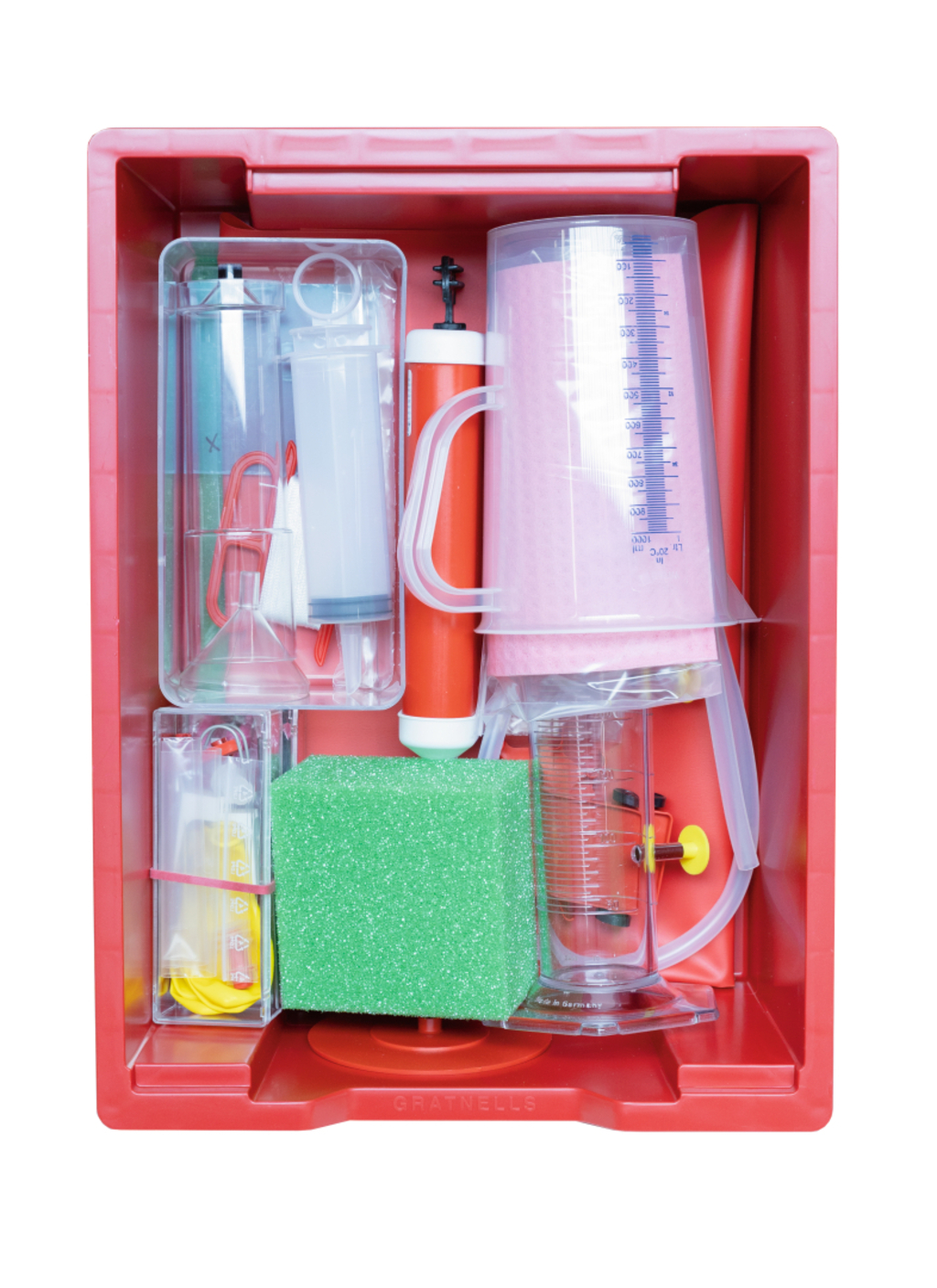
- 1 × Storing Tray deep, red
- 1 × Carriage
- 4 × Clamp socket, 10 mm
- 1 × Tread on spool
- 1 × Syringe with nozzle, 100 ml
- 1 × Lid
- 1 × Glass tubing, straight, 200 mm
- 1 × Paddle wheel
- 1 × Glass tubing, straight, 100 mm with jet
- 1 ×
- 1 × Adhesive tape
- 1 ×
- 1 × Measuring Beaker, 1000 ml
- 1 ×
- 1 × Air-cushion disc
- 1 ×
- 1 × Silicone tubing, 7/1,5 mm
- 1 × Parachutes, with weight
- 1 × Balloons with reinforced surface tension
- 1 × Plastic tube
- 1 × Metal axle, 125 mm
- 1 × Screen translucent, plastic
- 2 × Plastic box 140/50/35 mm
- 1 × Trough with two bores
- 1 × Waterproof underlay 65x65 cm
- 1 × Cleaning cloth
- 1 × Lidfoam grey,515x355x10mm
- 1 × Carton for SEG (large tray)
- 1 × Drain vessel with spout 500 ml
- 1 × Immersion tube
- 1 ×
- 1 ×
- 1 ×
- 1 ×